
 LinguaVox
 ISO 9001
 ISO 17100
 ISO 18587
Brief the work being discussed
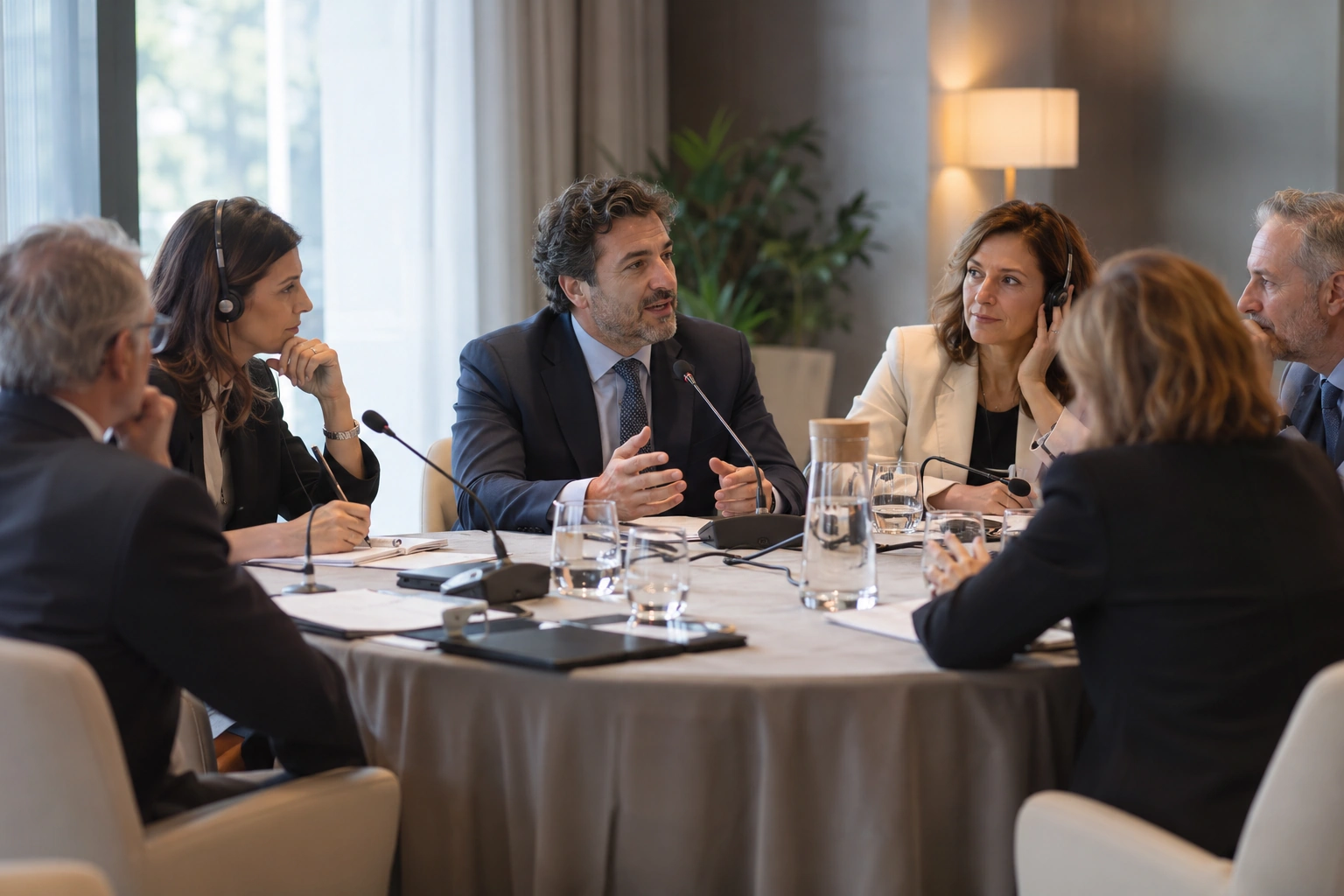
Tell us whether participants will review a project schedule, demonstrate a product or negotiate terms. Speaker names and roles help establish who will address whom. Internal abbreviations, process names and significant figures should be shared early. A concise agenda showing the decisions to be made can give the interpreter better context than a broad meeting title.
If one team presents in Spanish and the other replies in Romanian, both directions are needed. English or another language may also appear and should be described separately. Our language interpreters overview offers language guidance but does not mean that one person can cover every combination and overlapping session. Ask participants what they will actually speak rather than inferring from their country.
Allow the discussion to develop
Liaison interpreting may suit a smaller group exchanging short questions and answers. The chair can help by allowing each contribution to finish before the next begins. For a longer presentation with planned pauses, consecutive interpreting may be more suitable. Add time for the interpreted sections, questions and any discussion of next steps.
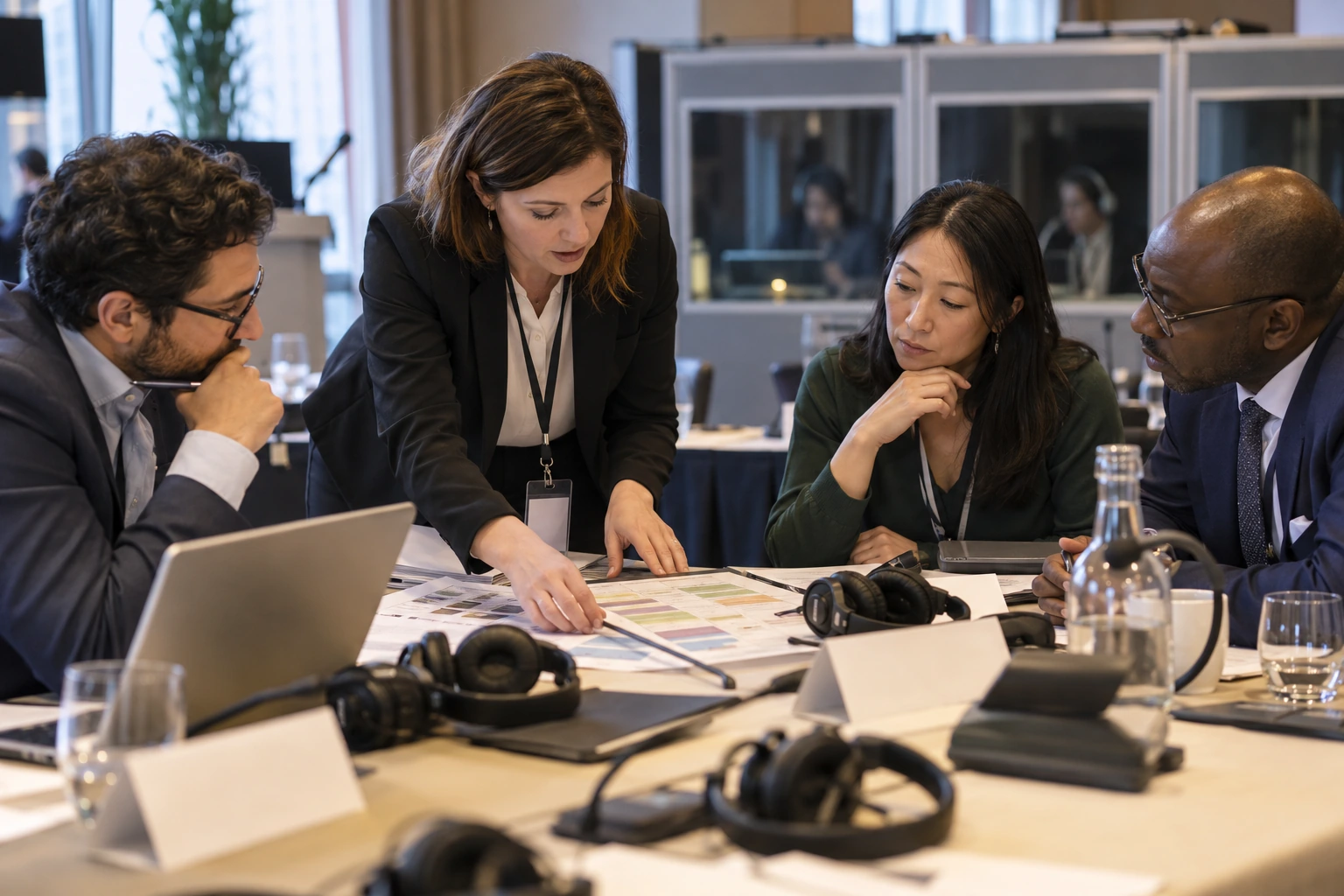
The interpreter conveys the contributions, while the parties remain responsible for checking and approving agreements. Send clauses or technical documents as reference material if they will be discussed. If the papers must be handed over in another language, that is a separate written assignment. Live interpreting does not create a translated minute, contract or report.
Move through the venue safely
A site visit needs a route, expected noise, group size and a guide who can be heard. Machinery names and safety instructions may require advance terminology. The interpreter should also hear questions from the visitors. If people split into two tours at the same time, each group needs separate coverage assessment. A working arrangement from a quiet meeting room may not suit a moving group.
Agree where the group will pause for explanations and who can answer questions at each stop. If protective equipment is required, tell the organiser before the visit so everyone can still hear clearly. The timetable should allow movement between areas and a brief check that the interpreted instructions have reached the intended listeners.
At conferences and events, send a timetable by room. Simultaneous interpreting may suit a run of speeches when a team and channels can be arranged, while a later private meeting may call for liaison. Audience size alone does not set the method. Pace, overlapping activities and listening languages matter.
Prepare material and check the sound
Share the programme, speaker names, terminology, slides, reference papers and spoken videos where available. Identify confidential material so access can be agreed. Our quality approach describes selection, briefing and coordination for the defined subject. Tell the coordinator if responsibilities, speakers or topics change; preparation based on an old agenda may no longer fit the meeting.
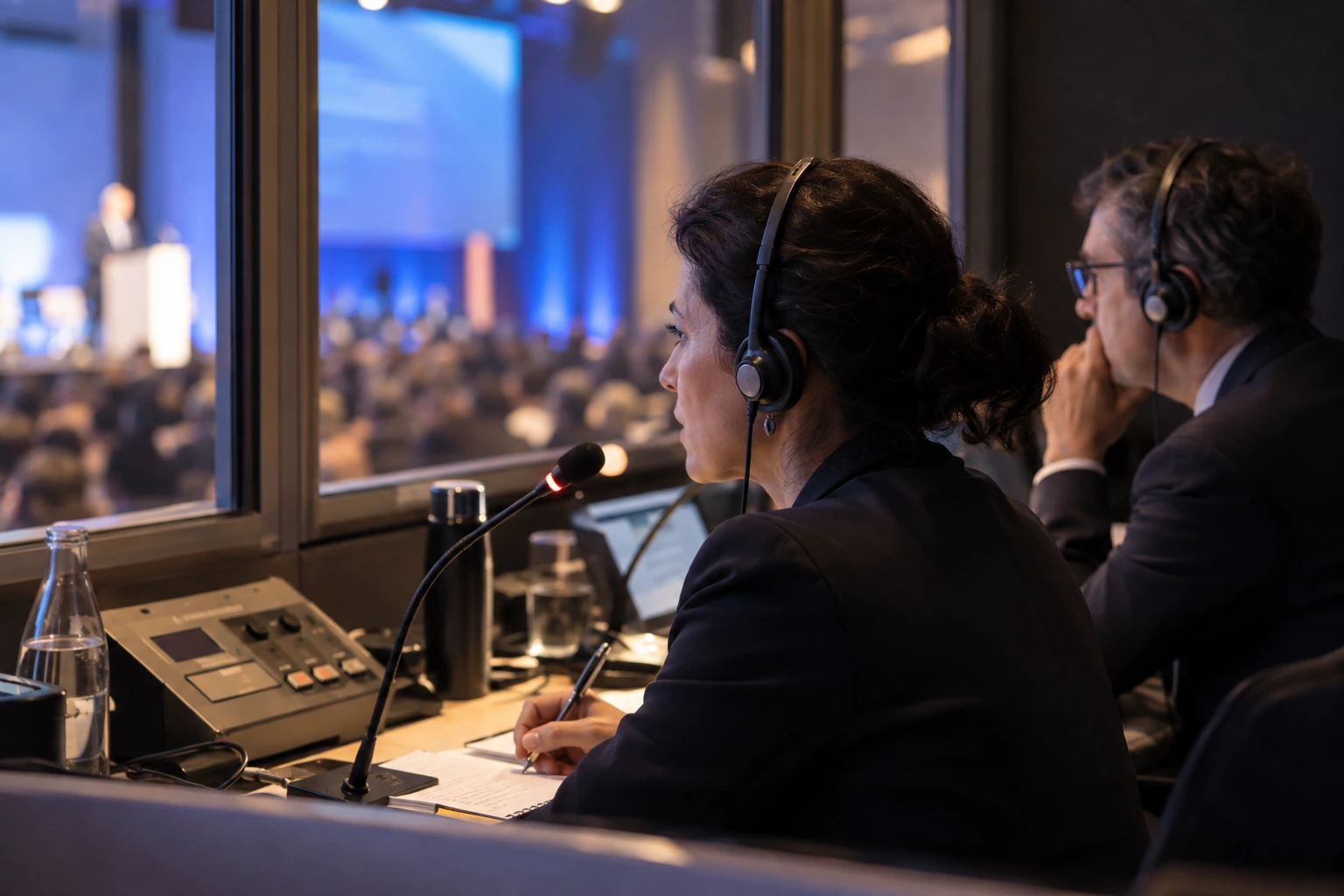
The venue may need microphones, booths, receivers or other audio support. LinguaVox assesses and coordinates technical needs with specialist suppliers according to venue, format and availability. Ask what the venue provides and who will test it. Questions as well as the main presentation must reach the interpreting team clearly.
Connect remote colleagues
Remote interpreting calls for platform access, clear sound, listening channels and managed turns. If one team sits together in Madrid while another joins online, test every person's voice in the room. Include shared videos and slides in a rehearsal where relevant. Agree who will act if a connection fails during a decision point.
For an assessment, send the date, times, venue or platform, participants, Romanian-Spanish directions, subject, agenda and available material. Identify parallel rooms, tours and provisional items. Use the quote form to describe the likely discussion. Suitable professionals, format and coordination can then be assessed against confirmed availability.
Frequently asked questions
What do you need for a Romanian-Spanish meeting?
Start with date, times, participants, directions, topic and venue or platform. A draft agenda showing talks and questions helps determine the format. Availability is checked for those actual requirements.
Can the interpreter attend a technical site visit?
The route, noise and speakers at each stop need to be understood. Process or machinery terms help with preparation. If the group divides, staffing must be assessed again.
Does interpreting produce translated meeting minutes?
No. Interpreting supports live speech. Translated minutes or contracts are separate written work, requiring the source document, languages and agreed deadline.
What if event sessions run in parallel?
Send room-by-room times and language requirements. One interpreter cannot follow simultaneous meetings in separate spaces. Teams and channels are assessed from duration and availability.
Can a Romanian meeting be interpreted by video?
It can be assessed with suitable platform access, microphones, sound and channels. A test should include room voices, questions and shared material. The chair manages turns and technical interruptions.