

 LinguaVox
 ISO 9001
 ISO 17100
 ISO 18587
Ask what people will speak and hear
Identify each speaker's language and what the different audience groups need. An English-to-Spanish talk may become a Spanish-to-English exchange during questions. Include the return direction in the timetable and listening plan. Some delegates can listen in English but prefer to contribute in Spanish; others may need full interpretation. Treat those as distinct requirements rather than a single vague bilingual label.
Do not assume that English can stand in for another language spoken by an international delegation. If a guest plans to contribute in a different language, specify it and have the combination assessed. Our language interpreters overview offers pages by language, while a professional is confirmed for the actual event. A participant's role or nationality does not establish their preferred speaking language.
Boardroom discussion and site visit
A negotiation with short exchanges in both directions may suit liaison interpreting. A results presentation with longer contributions and planned pauses may be better assessed for consecutive interpreting. Send the people involved, speaking order and realistic time for the interpreted turns. A meeting agenda that ignores translated responses can leave little room for proper clarification.

A site tour adds movement, background noise and specialist terms. Share the route, who will lead each stop and any equipment or processes to be demonstrated. If the group splits into simultaneous discussions, separate coverage may be needed. One interpreter cannot hear two English-Spanish conversations in different rooms at once, even if the subject is related.
Conference audiences and panels
Simultaneous interpreting may help a conference or event keep its programme moving without pauses after each speaker. Provide a room-by-room timetable, the language of each presentation and what delegates need to hear. Audience questions can reverse the direction of the main speech. Parallel panels cannot automatically share the same team.
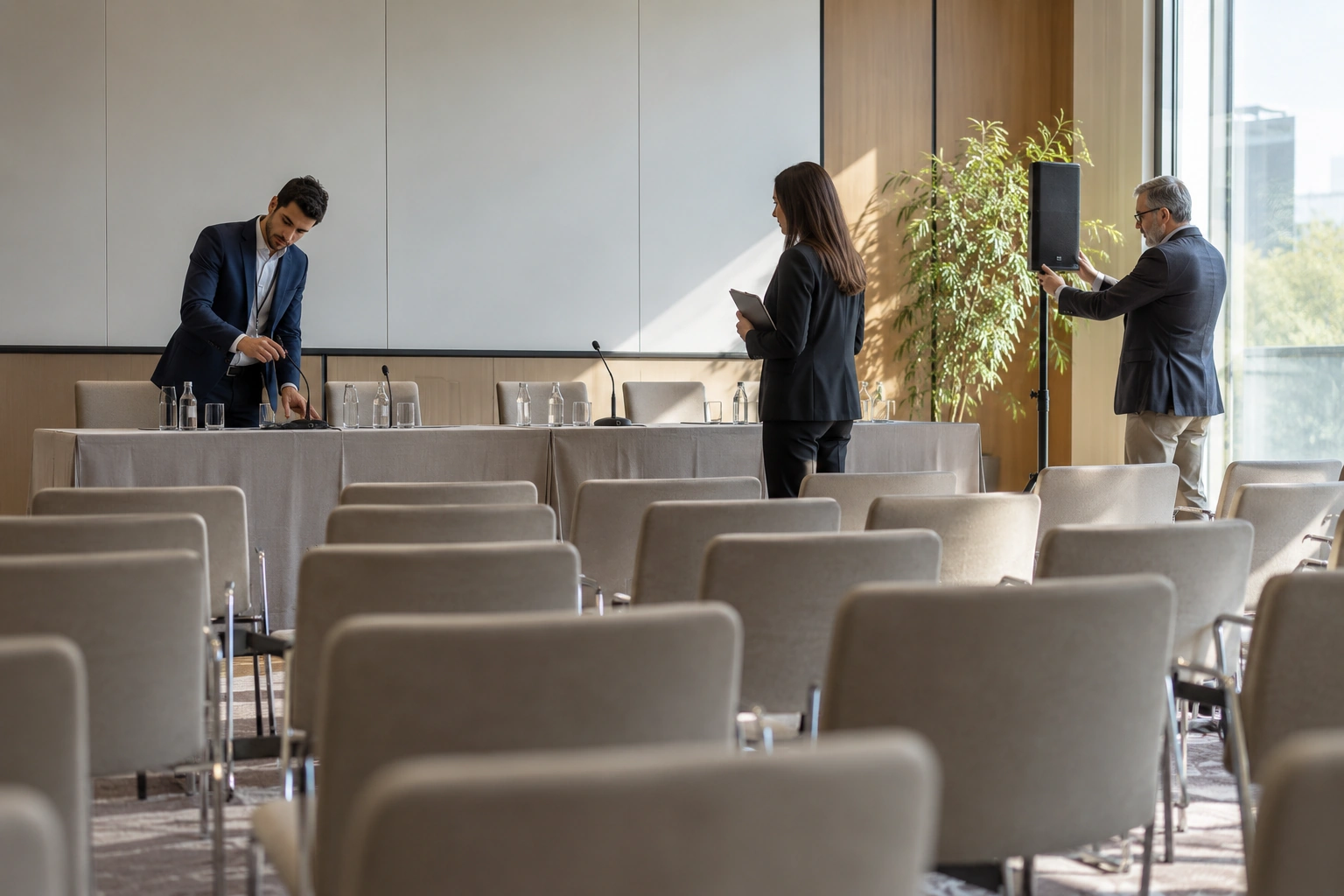
The venue and method determine whether booths, receivers, microphones or channels are required. LinguaVox assesses and coordinates technical needs through specialist suppliers according to venue, format and availability. Find out what sound facilities exist and who will test speaker and audience microphones. A question inaudible to the interpreter cannot reach the listeners on another language channel.
Prepare the particular subject
Send speaker names and roles, slides, terminology, figures and relevant background papers. A scientific talk, board meeting and software demonstration have different vocabulary even when all are conducted in English. Our quality approach describes selection, briefing and coordination for the assignment. Flag spoken videos and last-minute speaker changes so their treatment can be reviewed.
Identify sensitive material before sharing it and agree access. Contracts, reports and handouts that delegates need in translation are a separate written task. Live interpreting helps participants follow speech; using a document for preparation does not produce a translated copy of it.
Online and hybrid speakers
Remote interpreting needs clear audio, platform access, language channels and a test. A speaker joining from elsewhere must hear questions from the room, while the interpreter needs both sides of the discussion. Provide time zones and a chair for turn-taking. If a video is played, check that its sound reaches the interpreting team as well as the audience.
For an assessment, send the date, timetable, venue or platform, programme, speaking and listening languages, English-Spanish directions, subject and available material. Identify parallel sessions and provisional points. Use the quote form to describe the real exchange. Format, staffing and availability are then checked without assuming that everyone prefers to work in English.
Frequently asked questions
Why might an English-language event need an interpreter?
Participants may understand talks yet need to ask questions in Spanish, or some may need the entire speech interpreted. Identify speakers and listeners in each part. The requirement depends on the actual exchange.
Can the same interpreter attend a visit and a meeting?
The activities can be assessed together if times, travel and working conditions allow. A visit may use liaison interpreting while a presentation needs another format. Include noise and room changes in the schedule.
How many interpreters does an English-Spanish conference need?
Duration, directions, format, turns and parallel rooms determine the team. Audience size alone is insufficient. A room-by-room programme allows professional and technical availability to be checked.
What should we arrange for a specialist meeting?
Slides, terminology, names, figures and background papers support preparation. Flag spoken videos and sensitive files. Share revisions before the event where possible.
Can an international video call be interpreted?
It can be assessed with time zones, suitable platform access, sound and listening channels. A test should include room and remote voices. A chair needs to manage turns and questions.