

 LinguaVox
 ISO 9001
 ISO 17100
 ISO 18587
Keeping a programme moving
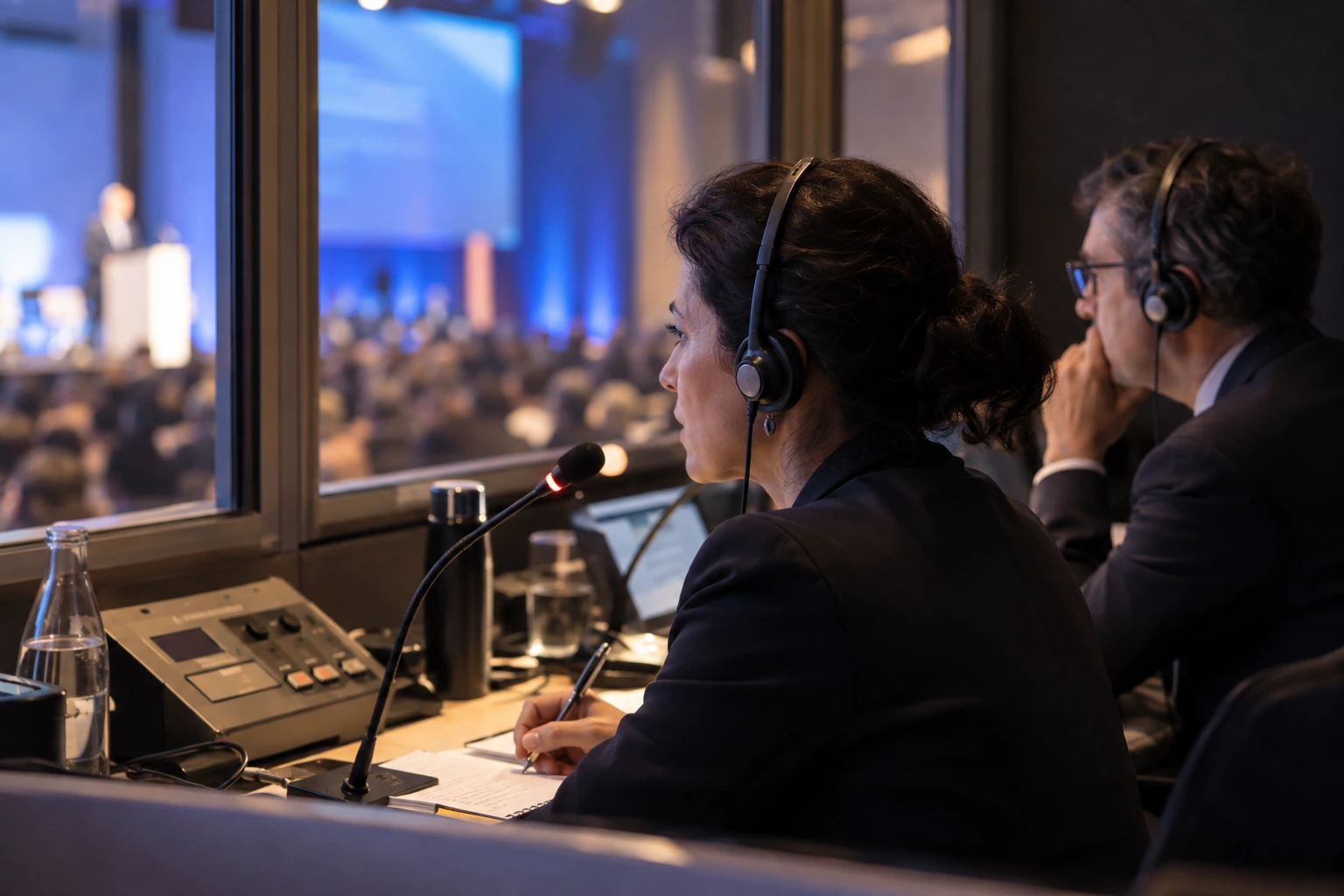
Simultaneous interpreting lets delegates follow a speaker almost as they speak. It is often considered for a continuous programme or a large audience where repeated pauses would interrupt the session. The practical questions include who will speak in each language, who needs to listen, whether sessions overlap and what audio arrangements the venue can support. A conference with parallel rooms needs a timetable for each room; a list of languages alone does not show how many teams are needed.
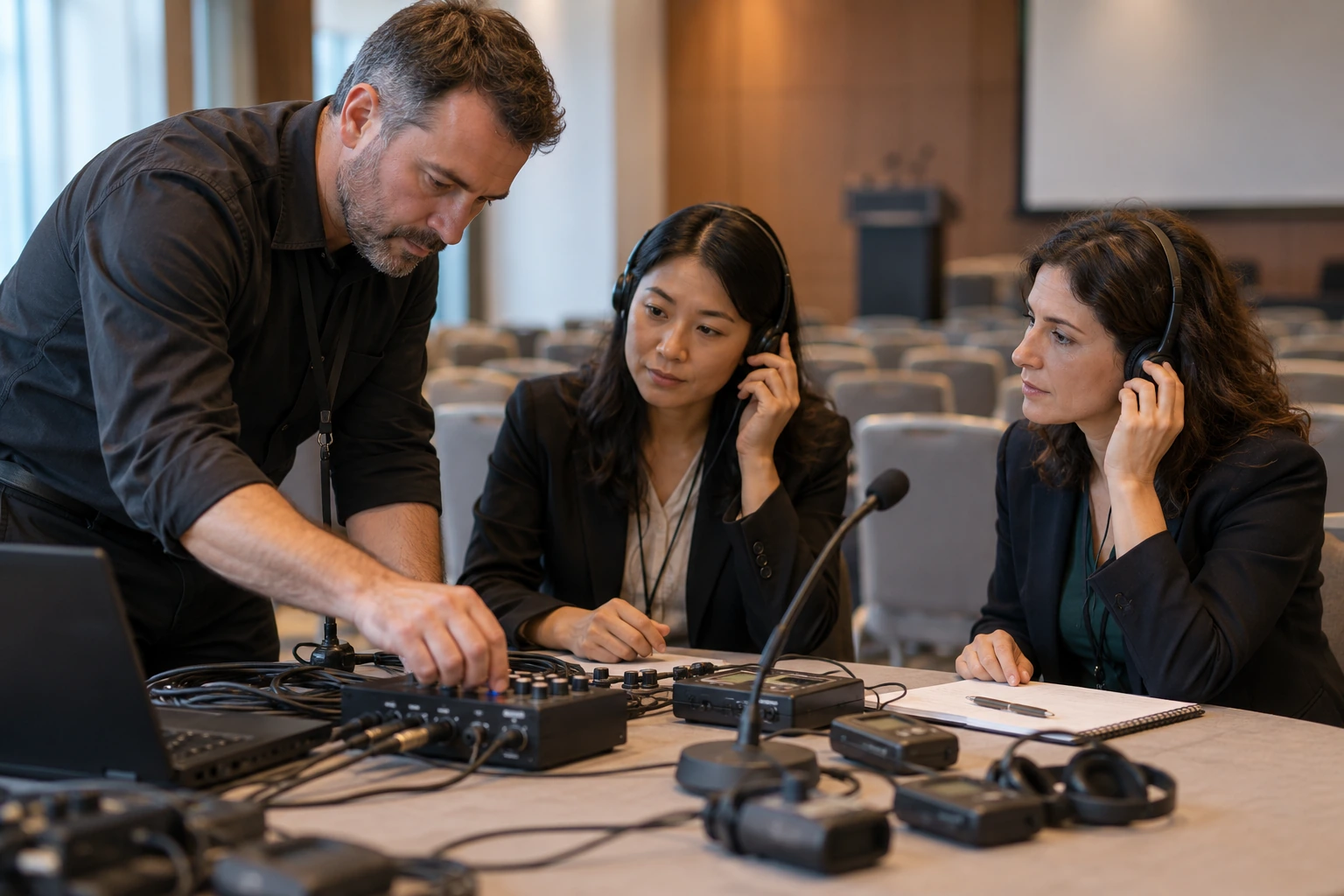
Where booths, receivers or other equipment may be needed, LinguaVox assesses and coordinates the technical requirement through specialist suppliers, according to venue, format and availability. Existing venue equipment still needs to be checked against the proposed audio feeds and channels. Establish who will test the sound, support speakers with microphones and deal with questions from the audience. The interpreting team needs to hear the original clearly throughout.
Making room for the interpreted turn
With consecutive interpreting, a speaker pauses after a section so the interpreter can convey it. This can work well for presentations, discussions or visits with a manageable number of speakers. Allow time for both the original contribution and the interpreted version, including questions and answers. An agenda based solely on the length of the prepared speech can leave too little time for the actual exchange.
A smaller group may need liaison interpreting instead. Here the interpreter supports exchanges in both directions as people ask, explain and respond, for example during a site visit or negotiation. Positioning, background noise, changing speakers and specialist vocabulary all affect the work. A meeting may use consecutive interpreting for a formal introduction, then move to liaison interpreting for discussion. Explain the sequence so the arrangement reflects it.
Joining from another location
Remote interpreting calls for clear audio, reliable platform access, suitable language channels and a speaking procedure understood by the moderator. A test before the meeting can expose microphone or permissions problems. The interpreter also needs access to slides and any video that is essential to the discussion. If some participants are in a room while others join online, plan how both groups will hear interpreted answers and how remote questions will reach the floor.
Remote delivery does not remove the need for preparation. Send the agenda, names and roles, reference material and time zone. Flag videos with speech in advance rather than playing them unexpectedly during a live session. Tell us whether the platform or venue has technical support and who can act if a connection fails. These details help determine whether the proposed format is workable.
Multiple sessions and working languages
A conference or event might combine plenary speeches, workshops and private meetings. Share a programme by room and time, with the languages each speaker will use and each audience needs to hear. Parallel activities, breaks and changes of format must be considered when assessing teams. The exact number of interpreters depends on the duration, directions and arrangements and is confirmed against availability.
Our language interpreters overview helps you identify the relevant languages, but a language listing does not confirm a professional for a particular date or direction. Mention switches of language during questions as well as formal presentations. If slides, contracts or other documents need written translation, describe that as a separate requirement; oral interpreting and document delivery follow different schedules and preparation routes.
Giving us a useful brief
Provide date, timetable and breaks, venue or platform, subject, estimated audience, language directions and a draft programme. Speaker names, slides and terminology help the professionals prepare. Explain which information is sensitive and which aspects of the event may change. Our quality approach covers selection, briefing and coordination for the particular assignment.
If you have not yet chosen between formats, a precise description of the meeting is more useful than a guess. Note what is confirmed and what remains open, such as a second room or a remote speaker. Send the details through the quote form so we can assess scope, team and technical needs. A proposal should reflect the event that will take place, rather than a generic headcount or an unconfirmed language combination.
Frequently asked questions
How do simultaneous and consecutive interpreting differ?
Simultaneous interpreting is heard almost while a speaker talks, helping a programme keep moving. Consecutive interpreting uses planned pauses. The right choice depends on the agenda, audience, speaking pattern and venue.
Can an event use several interpreting formats?
A plenary session and smaller meetings can be assessed separately within one programme. Send rooms, times and working languages so overlaps and staffing can be checked. The eventual combination depends on the actual schedule and availability.
How many interpreters will we need?
Duration, language directions, format, turns and parallel sessions all matter. Audience size alone cannot establish a team. A draft agenda allows the requirement to be assessed and suitable professionals to be confirmed.
Who supplies conference booths and receivers?
LinguaVox can assess and coordinate technical needs through specialist suppliers according to venue, format and availability. Tell us what the venue provides and which language channels are required. Equipment provision is agreed for the specific event.
What should we send for a remote meeting?
Share the platform, date and time zone, participants, speaking directions, agenda and reference material. A sound and channel test should be planned. Explain how the moderator will handle questions and what technical support is available.