

 LinguaVox
 ISO 9001
 ISO 17100
 ISO 18587
Choosing how speech will be interpreted
Simultaneous interpreting delivers the message almost as the speaker talks. It can suit a programme that cannot pause after each contribution. Consecutive interpreting builds pauses into the conversation or presentation. Liaison interpreting supports two-way exchanges in smaller groups, such as a visit or negotiation.
The number of guests alone does not settle the choice. Speech length, audience questions, languages and room arrangement also matter. A conference may use one format for its plenary session and another for meetings afterwards. Our interpreting services explain what to consider before a format is agreed.
Conferences and working meetings
For a conference or event, share the current programme, overlapping sessions, speaker times and working languages. Interpreters prepare more effectively with slides, speaker names, terminology and background provided in advance. Last-minute changes should reach the coordinator so turns and briefing material can be adjusted. If delegates will ask questions, specify which languages they may use and who needs to hear the answers.

A board meeting can involve sensitive information and specialist vocabulary. A factory tour adds movement, background noise and equipment names. A product launch may include video or live demonstrations requiring early access to the content. Calling them all “events” does not make their staffing, preparation or technical arrangements identical.
Languages in both directions
Tell us what speakers will actually use and what each group needs to hear. Someone may present in English and then ask questions in Spanish; the return direction needs to be considered. Our language interpreters overview includes relevant languages for English, Chinese and Japanese. Availability is confirmed for the date, precise direction and format, rather than inferred from a language label.
Written contracts, slides or other documents needed for the event are a separate task from oral interpreting. LinguaVox can assess these through its translation services where they support the meeting. Scope and delivery dates for written material should be agreed separately from interpreter attendance.
Remote participation and equipment
Remote interpreting needs clear audio, suitable platform access, language channels and a test before the session. Moderators should know how speaking turns and questions will work. In a large venue, booths, receivers or another technical arrangement may be required. LinguaVox assesses and coordinates those needs through specialist suppliers according to the venue, format and availability.
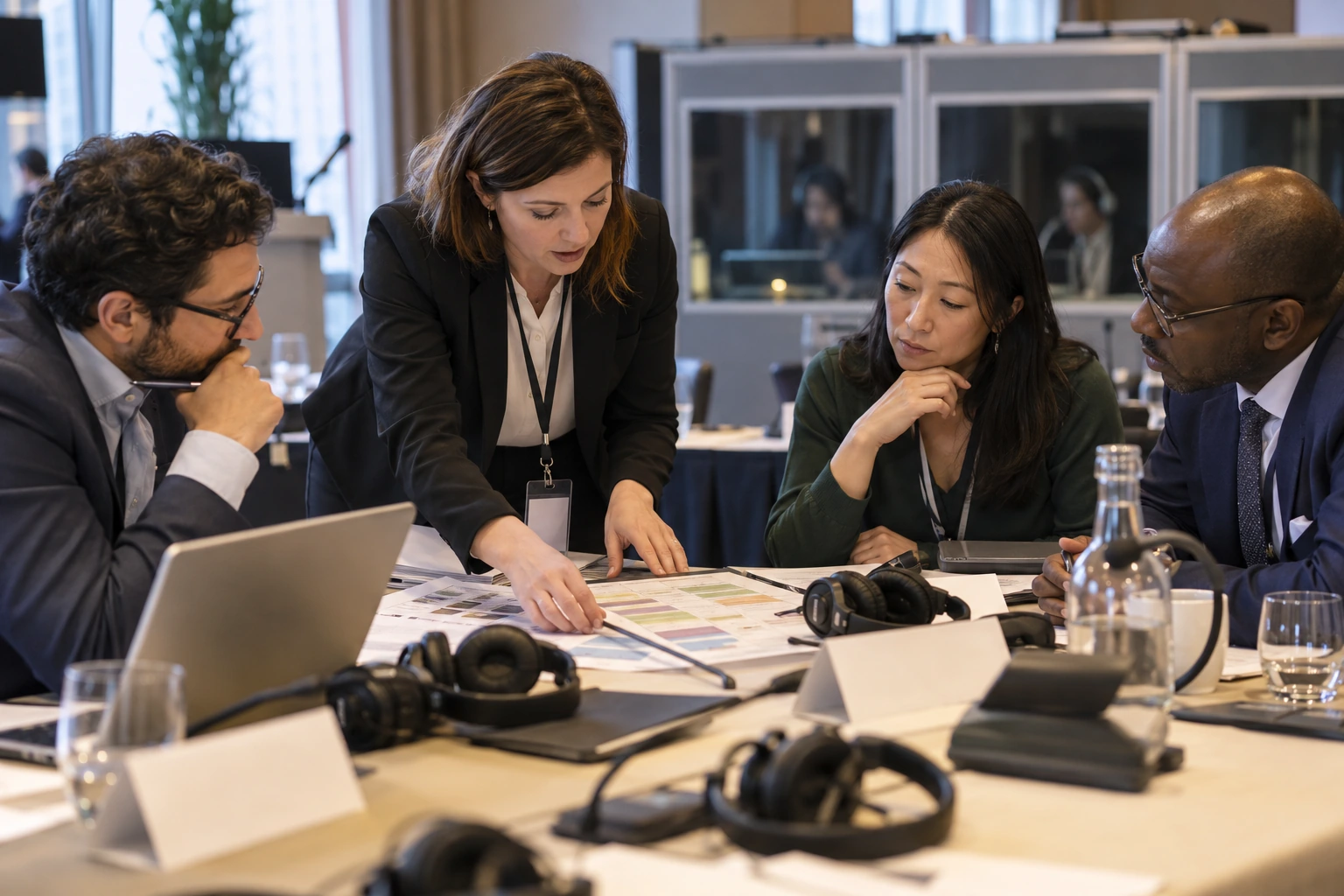
A moving site visit has different logistical needs from an auditorium. Give the room layout, expected audience and facilities already provided by the venue. If an audiovisual supplier is involved, it helps to establish who supplies the audio feed, conducts testing and supports the event on the day. The interpreter's working conditions should be clear before the format is finalised.
When a speaker joins a room remotely, check that their voice reaches the interpreters clearly and that they can follow any slides or video. Agree how the moderator will introduce remote questions and what happens if the connection fails. These small programme decisions affect the language service as much as the platform choice.
Asking for a proposal
Send the date, timetable, venue or platform, languages and directions, number of speakers and listeners, programme and subject. Flag breaks, parallel sessions and available briefing material. If the agenda is provisional, tell us which elements may change. A useful proposal identifies those open decisions and checks the team actually available.
Our quality approach describes how professionals are selected, briefed and coordinated. Use the quote form to describe your event or meeting. The details allow us to assess the work without claiming an interpreter is available for a combination, date or speciality that has not yet been confirmed.
Frequently asked questions
Which format suits a business meeting?
It depends on the participants, languages and expected pace. A small two-way discussion may suit liaison interpreting; a presentation with planned pauses may suit consecutive. Send the agenda so the format can be assessed.
Can you coordinate interpreters for several conference rooms?
We can assess a programme with parallel sessions once timings, languages and room capacities are clear. Overlaps and interpreter turns must be identified. Team availability and technical requirements are confirmed against the actual event.
Do you rent booths and receivers yourselves?
We assess and coordinate technical needs with specialist suppliers according to venue and format. Tell us which equipment the site already has. Any proposed additional provision depends on availability.
Can interpreting be provided by video call?
A remote arrangement can be assessed with platform access, audio channels and a pre-event test. We need the agenda, languages, participants and question procedure. Sound quality and moderation are essential.
When should the programme be sent?
Share a useful draft as early as possible and communicate changes. Slides, terminology and speaker names help preparation. Availability is confirmed for the date, language directions and duration.