
 LinguaVox
 ISO 9001
 ISO 17100
 ISO 18587
Map who speaks and who listens
List the language of each presentation and the language each audience group needs. A keynote may be delivered in English while questions come from Spanish-speaking delegates. If a discussion brings in another language, the return direction needs to be specified too. The moderator's microphone and the way speaking turns are allocated affect what the interpreters can hear. The language plan should cover questions and panel exchanges as well as prepared speeches.
For conferences and events with parallel rooms, prepare a timetable for each space. Interpreters cannot automatically cover two sessions taking place at once. Allow for overruns, breaks and movement between rooms. A working programme, even before every speaker has been confirmed, allows the overlapping requirements to be identified and the remaining decisions to be recorded.
Give the team material to work from
Slides, speaker names, background papers, acronyms and preferred terminology help professionals prepare for the subject and the intended audience. Share demonstrations or videos with speech in advance where possible. A number displayed only on a screen, a pre-recorded quotation and a spontaneous question each create a different task. Changes to the programme should reach the interpreting coordinator promptly so preparation and turns can be adjusted.

A broad subject heading rarely communicates the specialist vocabulary likely to arise. Tell us whether speakers will discuss clinical procedures, financial results or a specific manufacturing process, for example, and what the delegates already know. Our quality approach covers selection, briefing and coordination for a defined assignment. Sensitive material can be identified when you share it so its handling and access can be agreed as part of preparation.
Make the sound arrangement workable
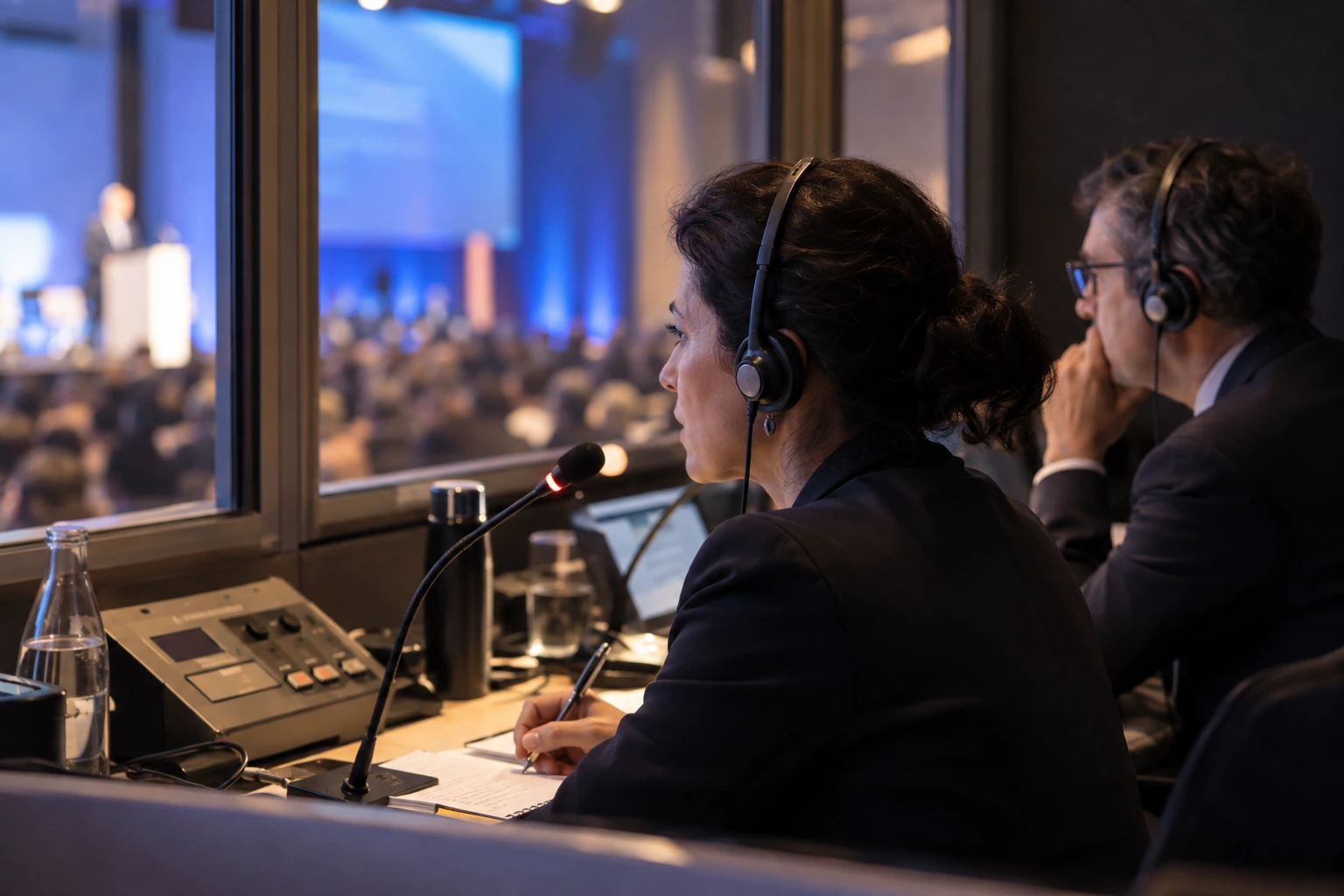
A physical venue may call for booths, receivers, microphones and separate language channels. LinguaVox assesses and coordinates technical requirements with specialist suppliers according to the venue, format and availability. Check what the venue already has, which feeds can be supplied and who will conduct sound tests and provide support on the day. The proposed arrangement should be agreed with the audiovisual team before the event begins.
Interpreters need to hear each speaker clearly and, where relevant, see the presentation and activity in the room. A delegate asking a question without a working microphone may be inaudible to the team even if people nearby can hear them. A practical test should include speaker changes, audience questions and audio returning from any remote participants. A list of equipment names alone does not establish that the entire signal path works.
Plan working turns and related activities
Team size is shaped by duration, intensity, language directions, breaks and parallel sessions. It cannot be determined simply from the number of delegates. A full day of continuous panel discussions places different demands on a team from a short presentation. Professional availability is confirmed for the exact date, subject and directions; a language listed in the language interpreters overview is not a booking confirmation.

An event may use consecutive interpreting for a press briefing and liaison interpreting for a visit after the plenary. Our interpreting services page compares formats. Send a schedule with each activity, rather than asking one format to cover every part of a diverse programme. Separate scopes also make it easier to plan movement, preparation and the contact person responsible for changes.
Include remote delegates in the sound plan
If a speaker joins online or delegates listen from elsewhere, remote interpreting considerations become part of the event. Establish how remote and in-room participants select their audio, how questions travel in both directions and who can resolve platform problems. Test the remote voices with the audiovisual supplier. A connection contingency should be understood by the moderator as well as the technical team.
To request an assessment, send the date, venue, room-by-room programme, speaking and listening languages, audience numbers, remote participation and equipment already available. Identify slides, videos and terminology you can share. Use the quote form to distinguish confirmed details from provisional ones. We can then consider a suitable interpreting team and the technical coordination required for that particular programme.
Frequently asked questions
Is simultaneous interpreting suitable for a small meeting?
It can be assessed, but headcount alone does not determine the format. A meeting with planned pauses or two-way discussion may be better suited to consecutive or liaison interpreting. Share its pace, participants and working languages.
How many interpreters does a full-day event require?
Working hours, intensity, language directions, breaks and parallel sessions all matter. The team is assessed from the actual programme and confirmed availability. A generic number could leave turns or rooms uncovered.
Do you own conference booths and receivers?
LinguaVox assesses and coordinates technical requirements through specialist suppliers according to venue, format and availability. Tell us what the venue provides and which channels are required. Specific provision is agreed for the event.
Can questions be interpreted in another language?
Yes, provided the languages and listening needs are included in the plan and suitable professionals are available. Questions need a usable microphone and clear speaking turns. The moderator should know which directions are supported.
Should speakers send their slides in advance?
Slides, names, acronyms and terminology help the team prepare. Videos and technical demonstrations should be flagged early. Send revisions through the agreed coordination contact so the interpreters can work with the current material.