

 LinguaVox
 ISO 9001
 ISO 17100
 ISO 18587
Check the language of every speaker
Ask whether delegates will present and answer in Japanese or use English for some sections. Identify what needs to be conveyed into Spanish and whether Spanish questions must be taken back into Japanese. The return direction can be overlooked when a programme focuses only on a keynote speaker. For a larger audience, establish whether everyone will listen in one language or separate listening channels are needed.
Speaker names and roles matter, particularly when representatives change between a formal session and a private meeting. Brief the interpreter on the participants, the product or subject and the outcome they are discussing. An interpreter conveys contributions and their relevant nuance; decisions and positions remain with the people in the room. Update the briefing if additional speakers join or the scope of discussion changes.
Choose the format as the day changes
Consecutive interpreting may suit a presentation with planned pauses. Allow time for the original contribution, interpreted sections and questions. A smaller conversation during a tour or negotiation may call for liaison interpreting, with short exchanges in both directions. List both activities and the transition between them so the working conditions, preparation and timings can be assessed together.

A sequence of uninterrupted conference speeches may be better considered for simultaneous interpreting, provided the team and audio channels are planned. For conferences and events with parallel rooms, give each session its own time, source language and listening needs. One professional cannot work in two rooms at once. Nor can a general note saying “Japanese available” explain which direction a panel discussion needs.
Prepare for a technical visit
A site visit calls for an itinerary, access rules, likely noise and an explanation of what equipment will be demonstrated. Product names, abbreviations and specifications in slides or reference sheets help the professional prepare. Flag numbers displayed on a screen and videos with speech; their content and sound need to be available to the interpreter. A quiet boardroom and a moving group on a factory floor require different placement and audio arrangements.
Send a running order, names, job titles, slides and terminology in advance. Identify sensitive documents so handling can be agreed. Our quality approach describes how a professional is selected and briefed for a defined assignment. Broad categories such as “engineering” do not tell the team which processes or products will be discussed. A short description of the real topic can be more useful than a long but generic event title.
Bring remote participants into the plan
A call with Japan needs a timetable showing the time zone for both sides. Confirm platform access, microphones, sound and speaking turns. Remote interpreting requires clear audio reaching the interpreter and a route for the interpreted version to reach listeners. A test involving participants from the relevant locations can expose channel or permission problems before the meeting begins.
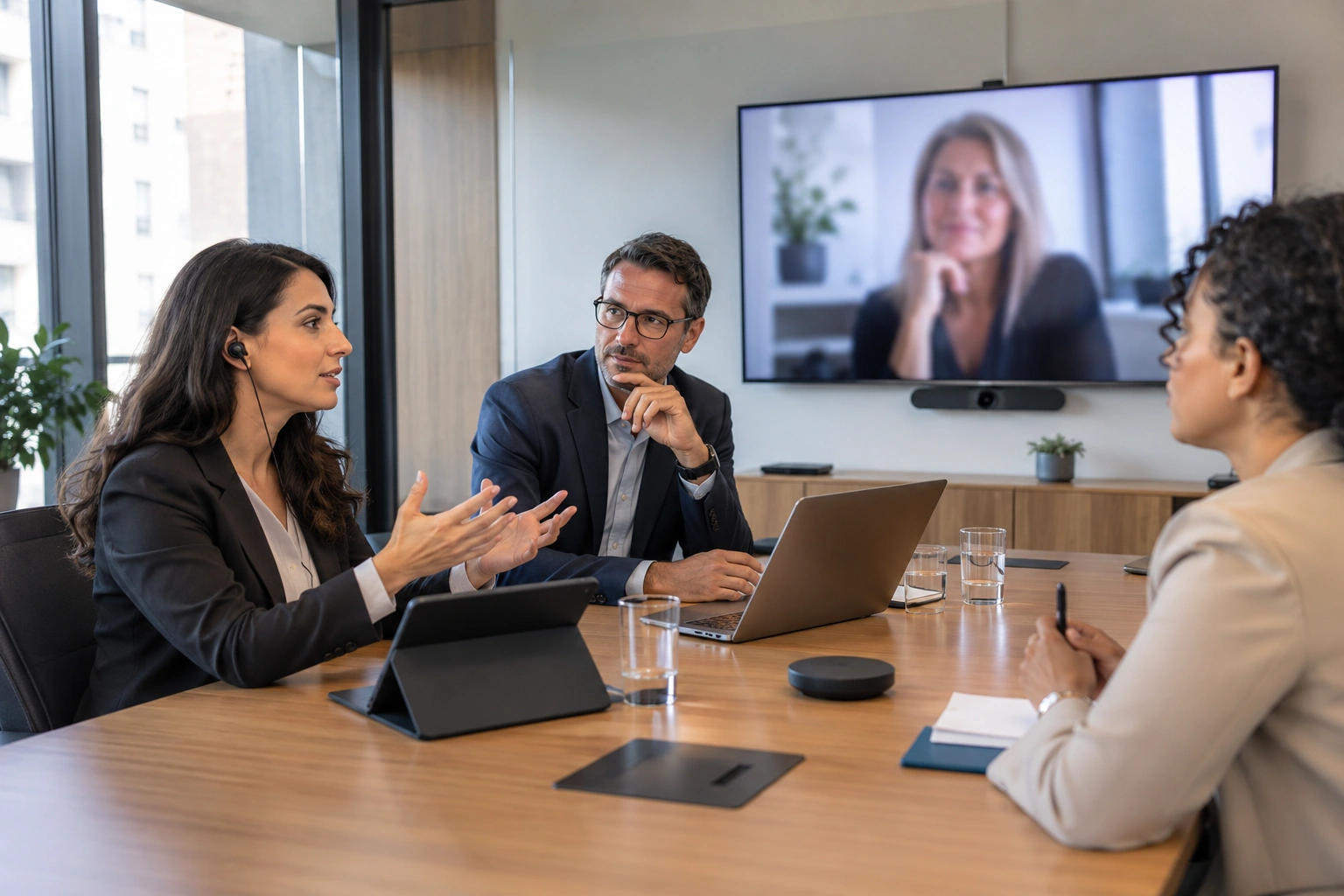
If some people are in a room in Madrid and others join from Japan, explain which group asks questions and who will chair the conversation. In-room voices without microphones may not be heard by a remote interpreter. Agree what happens if a connection drops during a demonstration. A meeting link on its own cannot establish a reliable multilingual exchange.
Requesting an assessment
Send the date, timetable and time zones, venue or platform, participant list, programme and subject. Specify the Japanese-to-Spanish and Spanish-to-Japanese directions required in each section. If English will also be spoken, state where: one professional should not be assumed to cover every combination. Our language interpreters overview points to other language guidance but does not imply a reservation.
Use the quote form to share a provisional programme and distinguish confirmed elements from open questions. We can assess format, preparation, professional availability and technical coordination. If delegates need translated documents to take away, describe the written work separately; live interpreting does not supply a finished document in another language.
Frequently asked questions
Should we say whether the delegation will speak Japanese or English?
Yes. Identify the language each participant will use and the language each group needs to hear. Nationality is not a reliable substitute. Directions and availability are confirmed against the actual programme and date.
Which format suits a business visit?
A two-way conversation on a tour may suit liaison interpreting. A structured presentation with pauses may need consecutive interpreting. The route, speakers and background noise influence the arrangement.
Can a video meeting with Japan be interpreted?
It can be assessed with clear times and time zones, suitable audio, platform access and a test. Tell us who chairs the discussion and handles questions. Availability is checked for the precise duration and directions.
What helps a Japanese interpreter prepare for a technical subject?
Send a running order, names, roles, terminology, slides and product specifications. Flag spoken videos and sensitive documents. Changes in topic or participants should reach the coordinator early.
Can one interpreter cover two conference rooms?
Not when sessions run simultaneously. Provide room-by-room times, speaking and listening languages and directions so separate teams can be considered. Any proposed staffing depends on confirmed availability.