 LinguaVox
 ISO 9001
 ISO 17100
 ISO 18587
Go beyond the language on the page
Identify who will speak Norwegian and who will use Spanish. A Norwegian-to-Spanish presentation may lead to Spanish-to-Norwegian questions. If English features, give its time, speakers and listening needs. One professional should not be presumed to cover three languages. A Norwegian document can help with terminology without determining the spoken form every contributor will use.
Written materials may use different conventions and contain proper names and specialist terms worth sharing. Here they support preparation for live speech. Our language interpreters overview lists other language guidance, while the actual combination and directions need professional confirmation. If the meeting splits into parallel groups, give times and rooms so each conversation can be assessed.
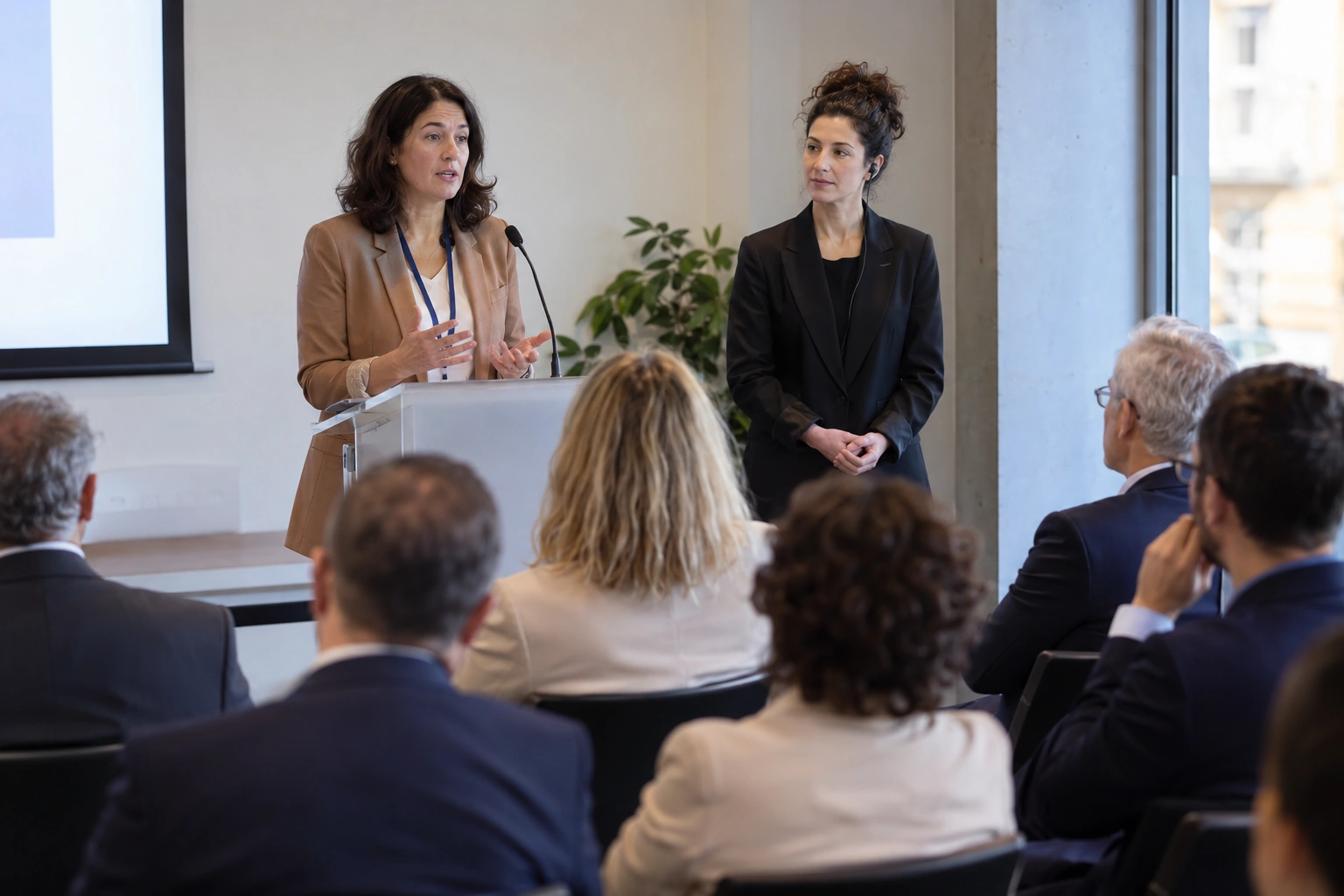
Where a chair will alternate languages, agree how they will introduce each speaker. A clear cue helps delegates select a listening channel and allows the interpreter to recognise the change before the next contribution begins. If questions may come from different parts of the room, establish how a microphone will reach those speakers.

From presentation to discussion
Consecutive interpreting may suit a talk with planned pauses. Allow for each interpreted section and questions. When participants move into a smaller discussion with frequent replies, liaison interpreting may be worth considering. Explain who will speak in each phase and which decisions the meeting is meant to support.
A site tour needs a route, expected noise and access rules. The interpreter should hear the guide and see what is being discussed. Share prototypes, figures or diagrams for preparation. Participants remain responsible for checking and approving their conclusions; interpreting makes the exchange possible but does not validate project data on their behalf.
Address the event audience
Simultaneous interpreting may help continuous sessions at conferences and events maintain their schedule if a suitable team and channels can be arranged. Send room-by-room times, speakers' oral languages and audience listening needs. Questions may reverse the direction. A private meeting overlapping a talk needs separate coverage.
LinguaVox assesses and coordinates booths, receivers and microphones with specialist suppliers according to venue, format and availability. Tell us what the site already has and who will test it. Panel and audience microphones need checking as well as the keynote feed. A technically clear opening speech does not guarantee the later discussion is audible to the team.

Brief the subject
Send an agenda, speaker names and roles, slides, terminology and background papers. Identify the product, project or scientific topic rather than relying on a broad sector heading. Our quality approach describes selection and briefing for a defined assignment. Provide spoken videos early where possible so their audio route can be assessed.
Flag sensitive documents before sharing them so access can be agreed. Papers for delegates in translation require a separate written brief and deadline. An interpreter may consult Norwegian or Spanish material in preparation without creating another written version by attending. Changes to speakers, topics or languages should reach the team promptly.
Test the video route
Remote interpreting needs suitable platform access, clear sound, channels and a test. If some people join from Norway while others sit together in Madrid, test all room voices and how each group listens. The chair should manage turns and respond to a dropped connection. Include shared videos in the rehearsal.
For a proposal, send date, length, venue or platform, participants, the spoken language of each block, Norwegian-Spanish directions, subject and agenda. Mark English or other contributions, parallel activities and available material. Use the quote form to share provisional points so the team and format can be checked appropriately.
Frequently asked questions
Are Norwegian documents enough for the brief?
They help with terminology, but speakers must confirm what they will actually say. Include who needs a Spanish version and whether questions need interpretation in return.
What if some of the meeting is in English?
Place those contributions in the schedule with their listening directions. One professional is not automatically available for every combination. Coverage is checked against the full programme.
Which method suits a technical visit?
A talk with pauses may use consecutive; shorter questions during the tour may call for liaison. Route, noise and group size matter. Share the itinerary.
Can Norwegian be included in a multiroom conference?
Sessions are assessed by time, speaker language and listening need. Parallel rooms require separate coverage. Teams and facilities depend on confirmed availability.
Can a video meeting with Norway be interpreted?
It can be assessed with suitable platform access, microphones, channels and a test. Name a chair and question procedure. Room voices must reach the interpreter clearly.