

 LinguaVox
 ISO 9001
 ISO 17100
 ISO 18587
Let speakers choose their working language
Ask each presenter what they will speak and what they need to hear during questions. A Basque-to-Spanish talk does not automatically cover Spanish-to-Basque questions. If English or another language will feature later, put it in a separate block. The language of a slide deck does not establish the oral language of every contribution.
Clarify who needs the interpreted version: a small working group or a full audience. Give estimated listener numbers, rooms and overlapping sessions. Our language interpreters overview offers other language guidance, but a professional must be selected and confirmed for the actual directions, format and date. The fact that some people are bilingual does not settle the needs of everyone present.
Choose a method for the exchange
Consecutive interpreting may work when the programme can pause between contributions. Include both original and interpreted speaking time and audience questions. A smaller two-way conversation may be better assessed as liaison interpreting. Participants should allow each speaker to finish a point before the next person takes the floor.
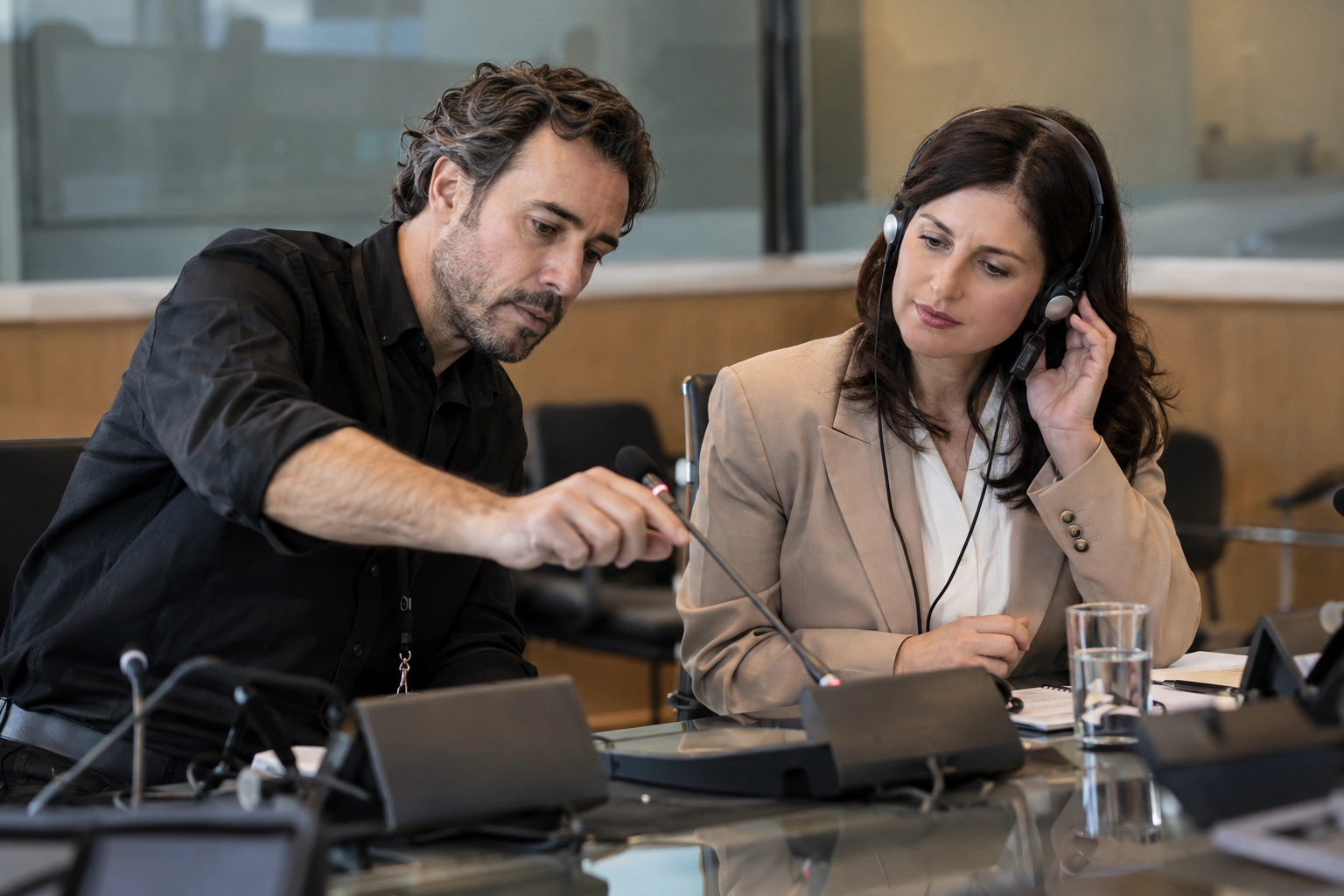
A panel with several contributors needs a chair and a language map for each panellist. If the group then divides into concurrent meetings, one interpreter cannot attend both. Describe the purpose and likely topics instead of merely stating that Basque speakers will be present. The speaking pattern determines the practical format and team.
When a session is open to the public, tell organisers how people will signal a question and which microphone they should use. If an intervention begins before the interpreter can hear it, the chair may need to ask for it to be repeated. A clear procedure protects the exchange for listeners relying on either language.
Make a public event audible
Simultaneous interpreting may keep a continuous programme moving at conferences and events where a suitable team and channels are available. Send times by room, speakers, source and listening languages. Explain how the audience will ask questions. A Basque-Spanish session may need both directions even if the advertised keynote mentions only one.
If booths, receivers or microphones are needed, LinguaVox assesses and coordinates technical requirements with specialist suppliers according to venue, format and availability. Ask what the room supplies and who will test audience as well as keynote microphones. The professional needs to hear all relevant contributions, not just the prepared speech.

Give the team relevant context
Share an agenda, speaker names and roles, slides, terminology and background papers. Cultural, scientific and business topics call for different preparation. Our quality approach describes how selection, briefing and coordination reflect a particular assignment. Flag spoken videos and names that may be unfamiliar so the team can prepare them.
Identify sensitive information before sending it and agree access. Basque interpreting addresses live speech. Papers, minutes or slides to be delivered in another written language need their own translation scope and deadline. Attending an event does not certify a document. Communicate changes of speaker or topic early so the briefing remains useful.
Add remote delegates to the plan
Remote interpreting can be considered for video meetings or hybrid events with clear sound, suitable platform access and language channels. Where some people sit in Madrid and others join online, test questions from both places. Include the voices and videos that will be used. The chair should manage turns and know what happens if a connection fails.
For an assessment, send date, times, venue or platform, speakers, Basque-Spanish directions and any other languages, subject and programme. Mark parallel rooms and available reference material. Use the quote form to share a draft and open questions so availability can be checked for the precise combination and working conditions.
Frequently asked questions
Is interpreting needed if some attendees understand Basque?
That depends on who needs to follow or contribute in each language. Describe speakers, audience and questions. Partial comprehension among some delegates does not define the requirement for everyone.
Can a two-way panel be interpreted?
It can be assessed with speakers, languages, turns and a chair. The method depends on pace and whether pauses are practical. Include both directions in the programme.
What if two sessions run at once?
Each room needs separate assessment. One interpreter cannot cover concurrent conversations. Send times, speakers and listening languages to consider teams and channels.
Does interpreting include translated Basque minutes?
No. Live speech and written minutes are separate assignments. A document needs its text, languages and deadline defined. Interpreting does not produce or certify that written version.
Can a Basque event be hybrid?
It can be assessed with suitable sound, platform, channels and a test. Room and remote questions must reach the interpreter. Name a chair to manage turns.